As parents, we quickly learn that young children hold ultimate control over three main areas of daily life: eating, sleeping, and toileting. When we lean into power struggles over these routines, it can feel exhausting for everyone involved. Instead, the Montessori approach invites us to step back and help children develop the intrinsic skills and body awareness they need to achieve true mastery over these essential functions.
In our infant and toddler communities at The Montessori Academy at St. John’s, children naturally learn to prepare snack, rest when their bodies are tired, and dress themselves. Alongside these milestones, they are also developing the neurological and physical control needed to stay dry.
We intentionally refer to this journey as "toilet learning" or "toilet awareness," rather than "toilet training." After all, we aren’t training our children through external conditioning. Rather, we are walking alongside them as they discover the joy of physical independence and become masters of their own bodies.
While this process takes time, it does not have to feel daunting. Here is how we approach toilet learning at MASJ, and how you can mirror these practices at home.
1. Establish Body Awareness from the Beginning
Toilet awareness does not start at two or three years old—it begins at birth. From the earliest days of life, we can speak respectfully to our infants about their bodies during diaper changes. Saying, "Your diaper is wet from your urine," or "I am wiping your bottom," helps them connect words to their physical sensations.
To support this awareness, we highly recommend using cloth diapers or moving into cotton underwear as they enter toddlerhood. Modern disposable diapers are remarkably effective at wicking away moisture. While convenient, they often prevent a child from feeling the actual sensation of being wet, which delays the brain-to-body feedback loop.
- Phrases to try:
- "Does your diaper feel wet or dry right now?"
- "Your underpants feel heavy. You had a lot of pee come out."
- "I see you are squatting down and concentrating. Your body is working on a poop."
2. Form a True Collaboration
When a child is wet or soiled, we view the diaper change or bathroom visit as an opportunity for connection, not an interruption to the day. We invite the child to actively collaborate in the process.
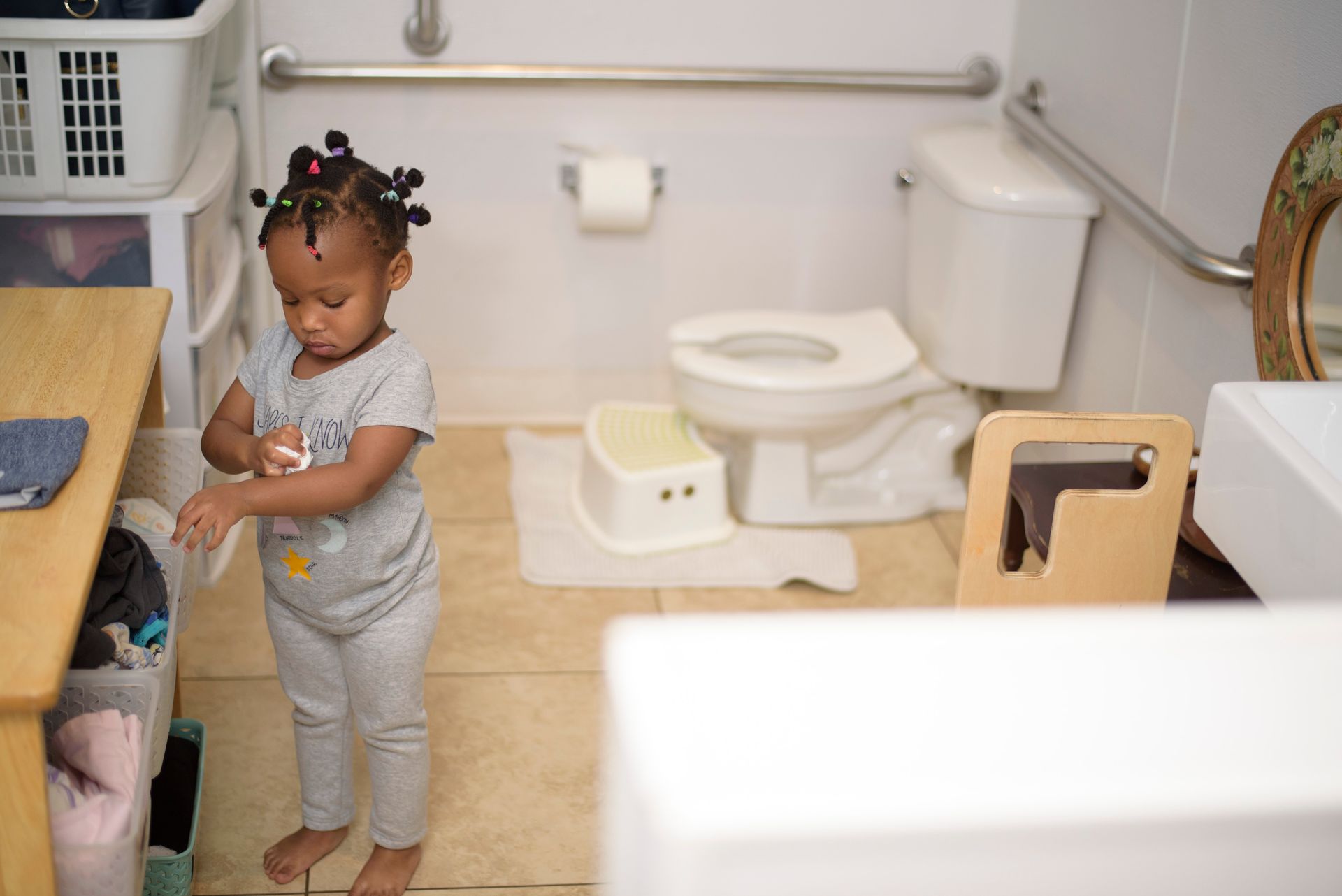
Even young toddlers can assist by pulling down their own pants, grabbing a clean pair of underwear, or placing their soiled clothes into the laundry basket. This active participation satisfies their developmental need for functional assignment and autonomy, reducing the urge to resist.
- Phrases to try:
- "You can hold your shirt up while I help you pull down your pants."
- "You open this side of the diaper tabs, and I’ll open this side."
- "I will take a turn to wipe, and then it will be your turn."
3. State the Facts Safely and Plainly
In our MASJ classrooms, our Guides stay entirely matter-of-fact throughout the toileting routine. Elimination is a completely natural bodily function, and we treat it with calm neutrality.
If a child experiences an accident and wets the floor, we avoid expressions of disappointment. Similarly, when they successfully use the toilet, we avoid excessive clapping or rewards. Over-celebrating can accidentally introduce performance anxiety or make the child dependent on external praise. Instead, we acknowledge the direct reality.
- Phrases to try:
- "Pee and poop go into the toilet."
- "Your underpants are wet. Let’s change into dry ones. Do you remember where your clean clothes are kept?"
- "I see pee on the floor. Please bring me the clean-up cloth from the bathroom so we can dry the puddle together."
4. Keep the Attitude Light and Friendly
Children are incredibly sensitive to adult emotions and can easily internalize our underlying stress or impatience. Maintaining a light, relaxed, and encouraging attitude ensures that children feel safe and comfortable with their normal bodily processes. We want to entirely eliminate any sense of shame, frustration, or disgust around toilet learning.
- Phrases to try:
- "We can always change into dry clothes, it's no big deal!"
- "Everyone used to wear diapers when they were small—even Mommy and Daddy. Now we use the toilet, and you will learn to use it too."
5. Step Away from Tricks or Treats
At MASJ, we offer the toilet based on the consistent rhythms of our daily routine, but we never force a child to sit. We also tend to avoid asking open-ended questions like, "Do you want to use the toilet?" as a toddler's natural default answer is often a resounding "No!"
Instead, find the comfortable middle ground by clearly stating that it is time to visit the bathroom as part of a transition (e.g., before going outside, or right after waking up).
We intentionally avoid sticker charts, treats, or bribes. While these tactics can produce short-term compliance, they interfere with the long-term goal of developing genuine self-assurance and internal motivation. Trust the process and trust your child's natural drive toward mastery.
- Phrases to try:
- "It is time to walk to the bathroom and try sitting on the toilet."
- "You listened to your body and peed in the toilet. You did it all by yourself."
Respecting the Journey
When caregiving routines are rushed, children miss the opportunity to understand their own physical identity. Taking the time to slow down, communicate clearly, and invite collaboration shows the utmost respect for your child's developing personality.
By guiding your toddler through toilet learning with patience and consistency, you are helping them take a monumental step toward becoming a confident, fully independent young person.
If you are currently navigating this milestone at home, remember that our AMI-trained Guides are always here to support your family. Feel free to reach out to discuss how we can beautifully bridge the routines of our school environments with your home.