
Unlike other species born with a predetermined set of behaviors, human babies are born with a magnificent universe of potentials. When a child joins our community at The Montessori Academy at St. John’s, we cannot yet know if they will become a master musician, a compassionate scientist, or a creative chef. It is truly awe-inspiring to consider: our youngest children are constantly, actively constructing the foundational skills they need to become the contributing adults of tomorrow.
Dr. Maria Montessori observed children through a precise, scientific lens. Over time, she concluded that this profound creative work could only happen because the young child's mind operates in a fundamentally different way than the conscious adult mind. In her seminal work, The Absorbent Mind, she wrote:
“The child has other powers than ours, and the creation he achieves is no small one; it is everything. Not only does he create his language, but he shapes the organs that enable him to frame the words... This wonderful work is not the product of conscious intention.”
Decades before modern neuroimaging could map brain plasticity, Dr. Montessori recognized the unique mental functioning of early childhood and termed it the absorbent mind. This special superpower belongs to children from birth to around age six.
What Does it Mean to "Absorb"?
Dr. Montessori chose her words with deliberate precision. Absorption implies "taking in" and integrating a stimulus into the whole. What is absorbed becomes a permanent part of the child's developing brain structure.
“Impressions do not merely enter his mind; they form it. They incarnate themselves in him. The child creates his own ‘mental muscles,’ using for this what he finds in the world about him.”
Because children under six absorb everything in their environment indiscriminately, they act like tiny sponges. They don't just memorize what they see; they embody it. They are taking it all in, even when we think they aren't looking!
Modeling with Intention
Because our children’s brains are hardwired to effortlessly absorb what is around them, our own actions must beautifully reflect what we expect from them.
- If we want children to sit at the table to eat, we must sit at the table to eat.
- If we want children to speak with quiet, calm voices, we must speak with quiet, calm voices.
- If we want children to carry items carefully using two hands, we must model that exact grace and courtesy ourselves.
A Snapshot from the Classroom
To illustrate the power of this unconscious absorption, we often share a favorite story from the Montessori tradition. A wonderfully tall toddler guide always used to squat down in front of the low shelves to select a material to present to a child. After squatting down, she would carefully pick up the item.
Though the toddlers were already at the perfect height to easily reach the shelf without bending, the guide noticed something fascinating: the children began walking to the shelf, dropping into a deep squat, and then picking up the material. Even though this movement required much more physical effort for their small bodies, they had unconsciously absorbed every nuance of the adult's behavior. To the toddler, the sequence of the grace was: walk to the shelf, squat down, select the material.
The Prepared Environment: School and Home
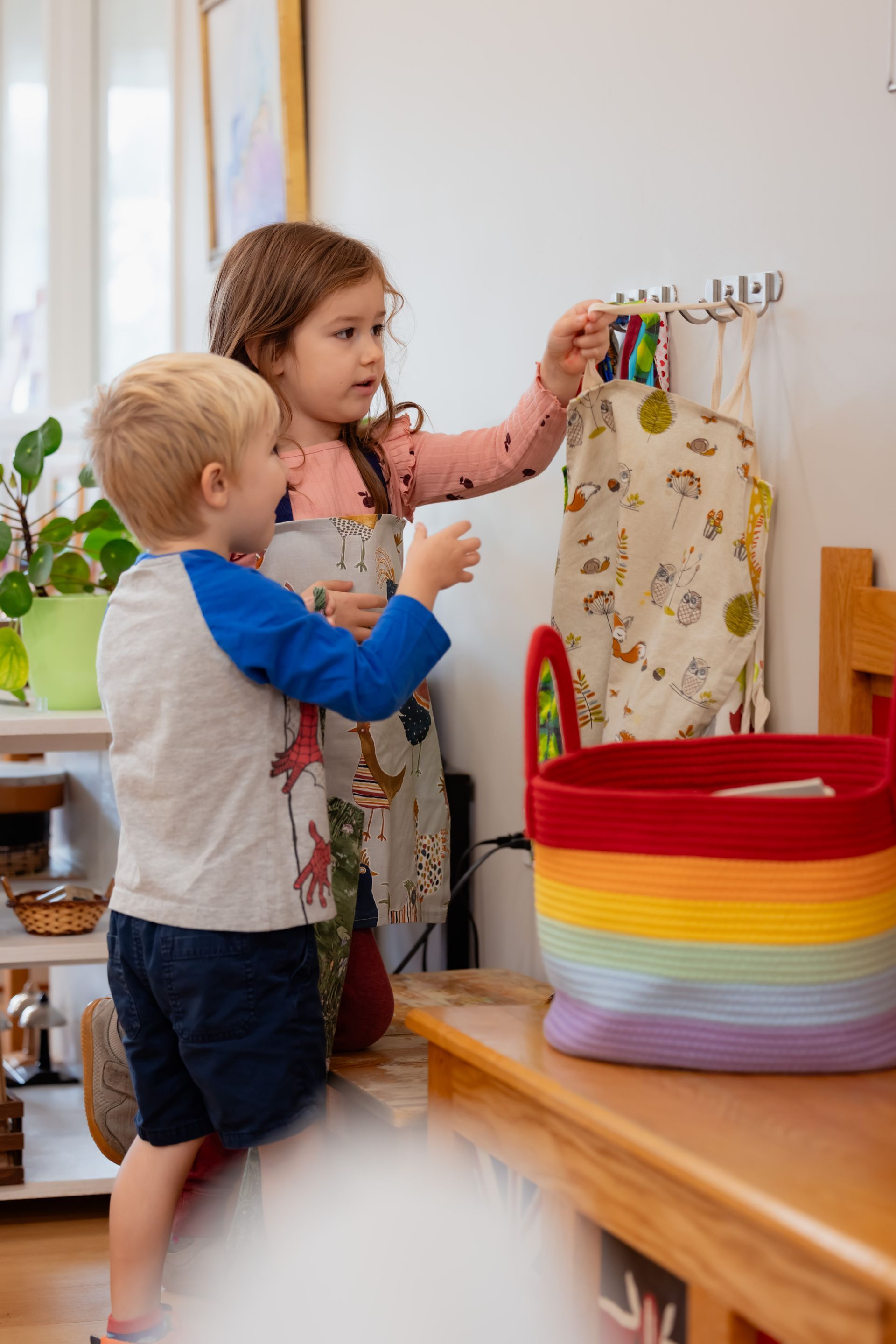
At MASJ, this reality means our educators are incredibly mindful of how we move, speak, and care for our classrooms. When the adults in our environments prepare a snack, we follow the exact same procedures as the children. We wash our hands, use a real plate, and sit mindfully at the snack table.
Living the routine alongside the children also allows us to continuously refine our Prepared Environment. By experiencing the classroom from the child's perspective, we can evaluate our systems:
- Are the child-sized dustpans easy to access and placed intuitively?
- Do the small spray bottles work smoothly for little hands wiping a table?
- What parts of the daily rhythm flow beautifully, and what feels cumbersome?
We invite you to look at your home environments through this same lens. Sometimes, it helps to literally kneel or sit on the floor to look at a room from your child’s height. What stands out from their vantage point? Is the space welcoming, orderly, and beautiful? What naturally attracts their attention?
Discover the Magic of MASJ
Because our children are full of limitless potential, we want to provide them with the highest quality surroundings—both in physical design and human connection. As we guide them through these foundational years, our goal at MASJ is to offer clear, consistent, and beautiful images for their absorbent minds to take in.
If you would like to see the absorbent mind in action and discover how our classrooms are intentionally designed to support this magical stage of development, we invite you to
schedule a school tour. We would love to welcome you into our community and share how we support children as they discover all that is possible.