In Montessori education, two words are woven into the rhythm of our daily life: grace and courtesy.
While these terms sound traditional, they lie at the heart of how children learn to navigate relationships, care for their environment, and develop a deep sense of social responsibility. But what do grace and courtesy really mean in practice? How do they function within our classrooms, and how do they support social development across different age levels?
Defining Grace and Courtesy
To understand their purpose, it helps to isolate each word:
- Grace refers to movement—simple elegance, physical self-awareness, and refinement of movement through space.
- Courtesy refers to attitude and behavior—showing respect, kindness, and consideration toward others.
Together, grace and courtesy represent how we move through our shared spaces with respect for ourselves, those around us, and our environment.
Practical Life: Grace & Courtesy Lessons in Toddler & Primary
In our Toddler and Primary classrooms, grace and courtesy are taught as an explicit component of the practical life curriculum. Guides do not assume children automatically know how to navigate complex social situations; instead, these skills are taught with the same care and precision as pouring water or washing a table.
Guides offer clear, brief demonstrations—often through lighthearted role-playing in small groups—on topics such as:
- How to walk carefully around a classmate’s work mat
- How to interrupt an adult or peer respectfully by placing a hand gently on their shoulder
- How to offer help to a friend
- How to tuck a chair under a table so others do not trip
- How to greet a guest entering the room
The Principle of Delayed Demonstration
We are very intentional about when and how these lessons are given. If a guide observes a child slamming a door or walking across a peer’s work, they refrain from confronting or public correcting in the moment. Correcting a child on the spot can cause embarrassment, making them feel unsafe or defensive.
Instead, the guide observes the need and presents a graceful lesson to a small group at a later time, neutral and free of shame. This allows the child to absorb the skill calmly and choose to apply it out of genuine understanding rather than compliance.
Evolving Through the Years: Elementary and Beyond
As children transition into Elementary, their developmental needs shift dramatically toward social relationships and peer dynamics. Grace and courtesy lessons evolve to meet this new stage of development.
At this level, lessons focus on giving children concrete tools for social communication:
- Resolving interpersonal conflicts directly and respectfully
- Listening to differing perspectives during group work
- Exercising discretion and empathy when a peer makes a mistake
- Demonstrating hospitality when receiving guests or hosting events
Elementary students also practice grace and courtesy out in the broader community—learning how to arrange off-site visits, interview community experts, and adapt their behavior appropriately to different environments.
The Goal: From Instruction to Inner Drive
The goal of grace and courtesy is never to enforce rigid, superficial politeness or force a robotic "please" and "thank you." Rather, the goal is for these actions to become an authentic, internal expression of the child's developing character.
"The essential thing is that [the child] should know how to perform these actions of courtesy when his little heart prompts him to do so, as part of a social life which develops naturally from moment to moment."
— Dr. Maria Montessori, The Absorbent Mind
When given regular opportunities to practice within a calm, prepared environment, courtesy becomes part of how children want to interact with the world.
Grace and Courtesy in Action at St. John's
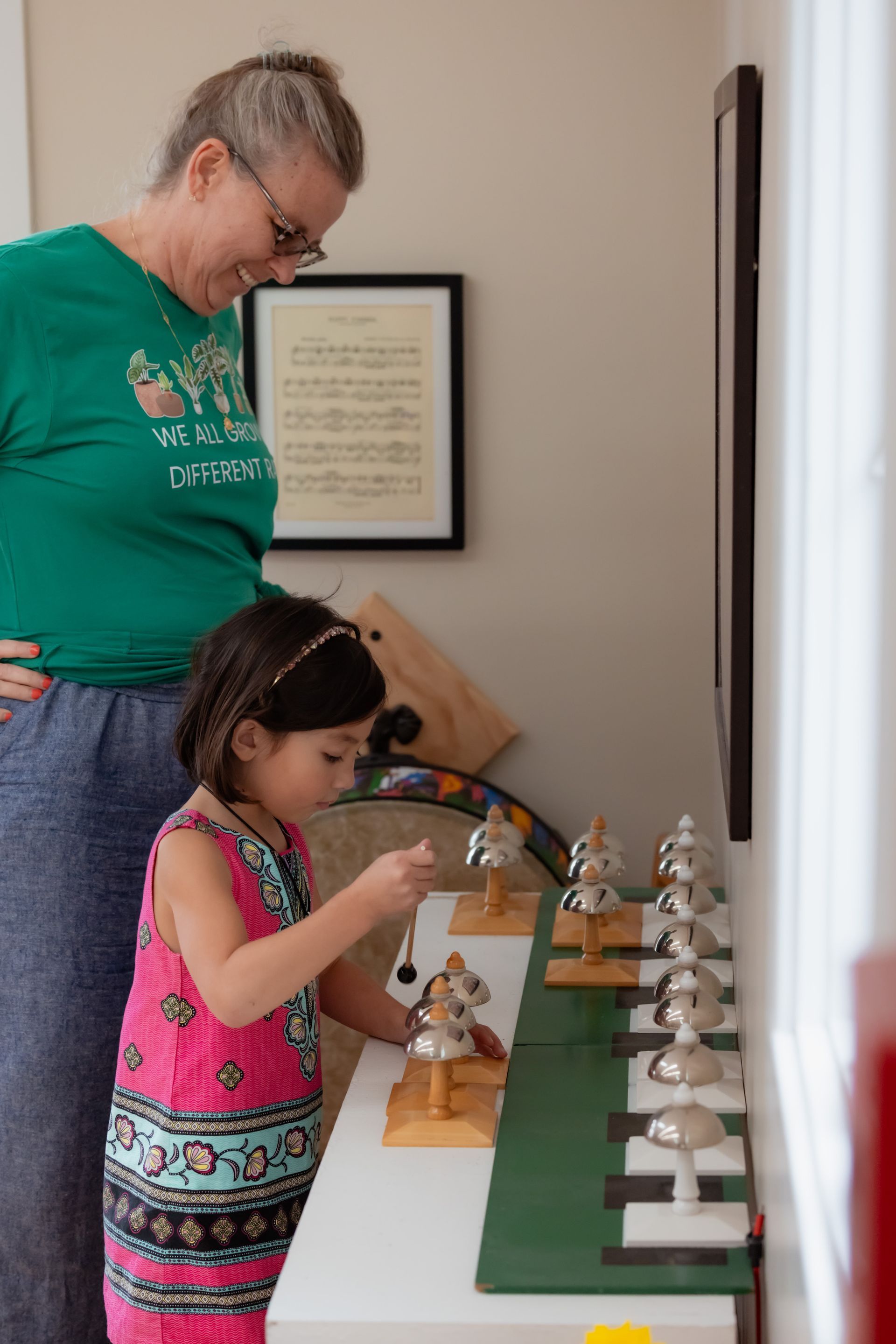
When you walk through the hallways and classrooms at The Montessori Academy at St. John’s, grace and courtesy are evident not in perfection, but in genuine empathy and care:
- A Primary child quietly bringing a tissue to a classmate who is feeling sad
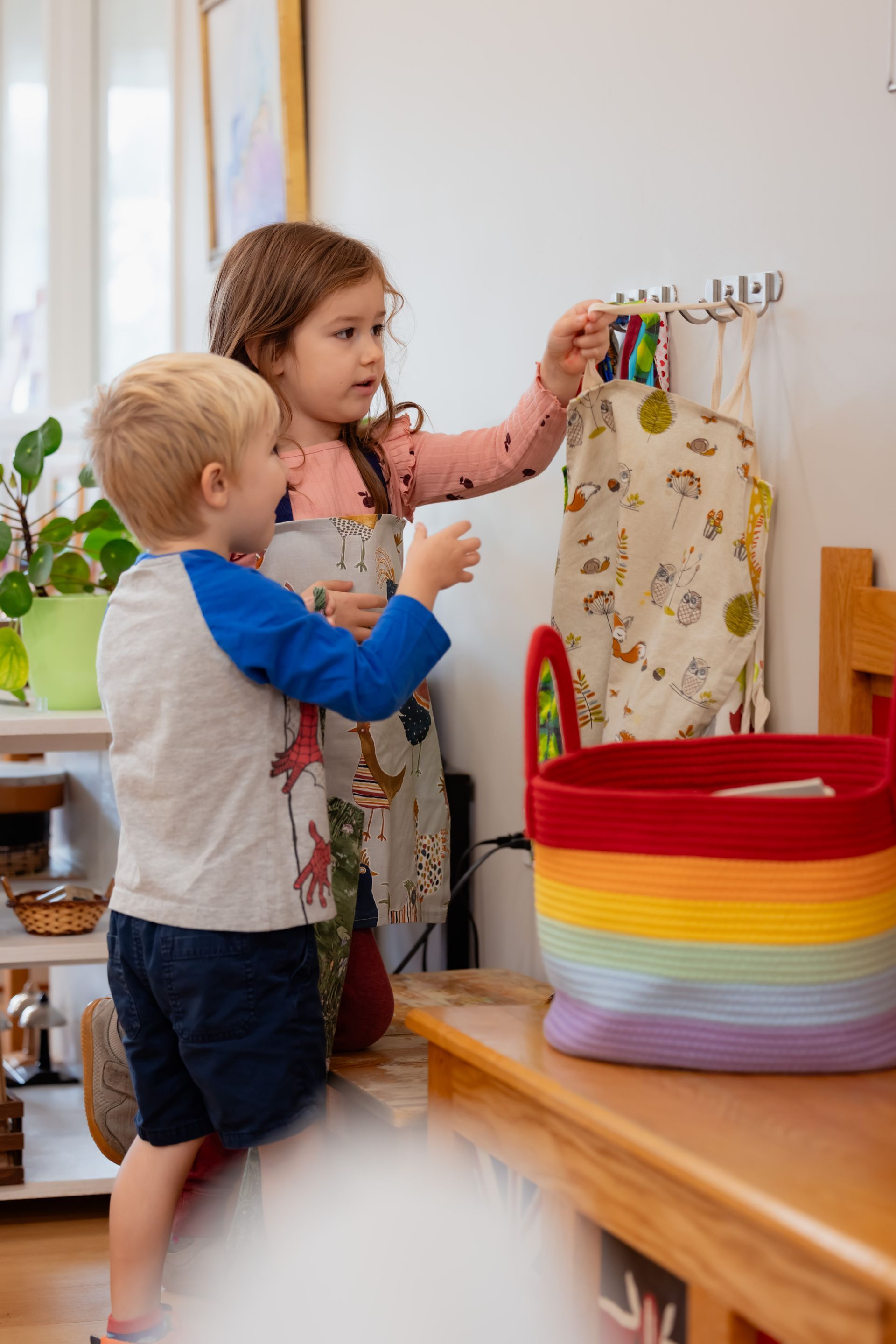
- Two children pausing their work to help a friend clean up a water spill
- A student pulling out a chair and offering a glass of water to an observing guest
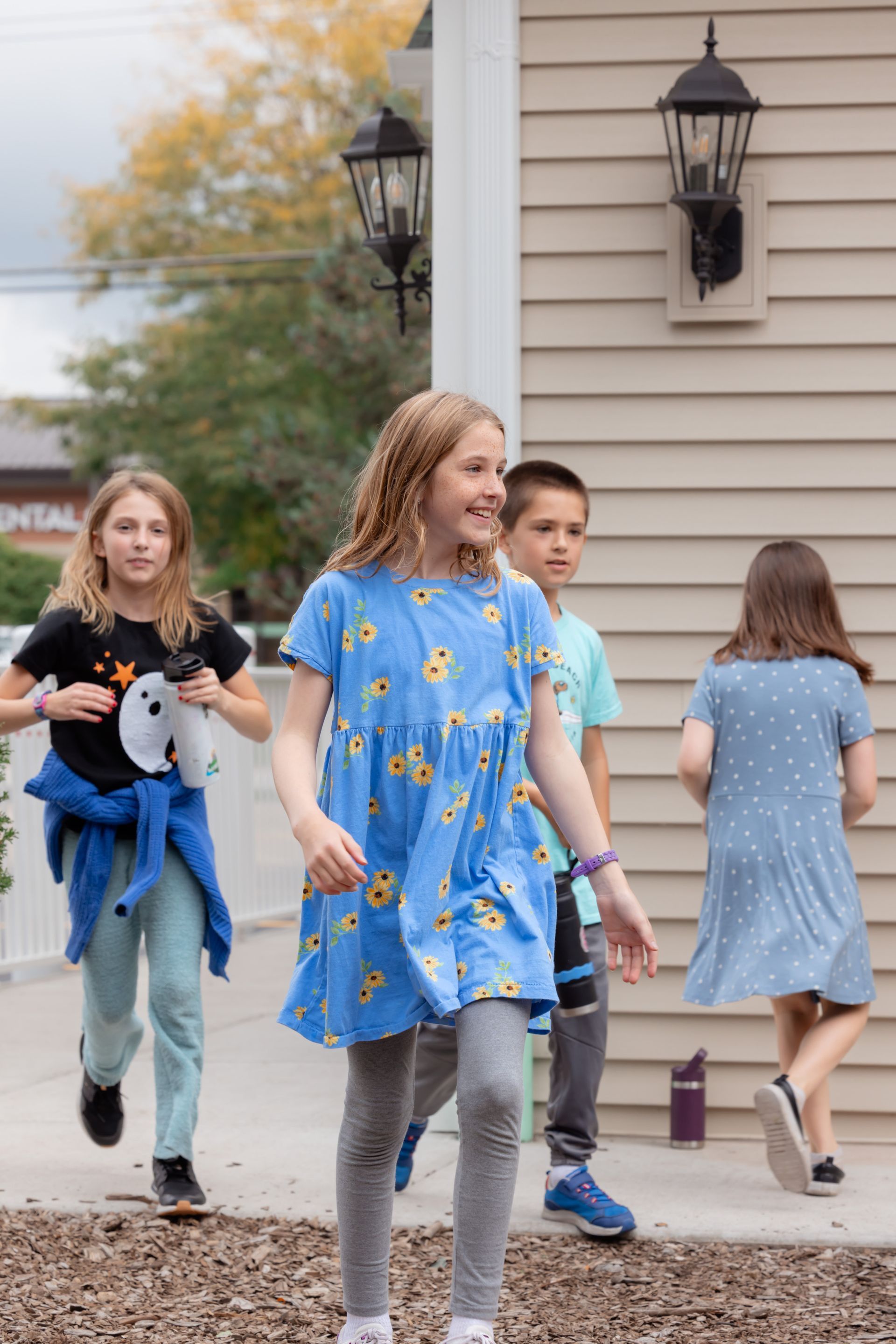
- Children carefully holding doors open for one another as a line moves outside
Through these daily habits, children move beyond basic manners. They develop an awareness of their impact on others and come to recognize themselves as valued, contributing members of a compassionate community.
Experience Our Community
We invite you to see how grace and courtesy shape the daily culture of our classrooms.
Schedule a tour today!