“If persistence be the true foundation of the will, we nevertheless recognize decision as the act of the will par excellence.”
— Dr. Maria Montessori, Spontaneous Activity in Education
In this quote, Dr. Montessori reminds us that persistence is at the heart of character development. Today, we often refer to this steadiness and perseverance as “grit.”
When children work through obstacles and remain committed to their chosen activity, they are doing far more than mastering a specific academic skill—they are constructing the very foundation of their will.
The Work of Persistence
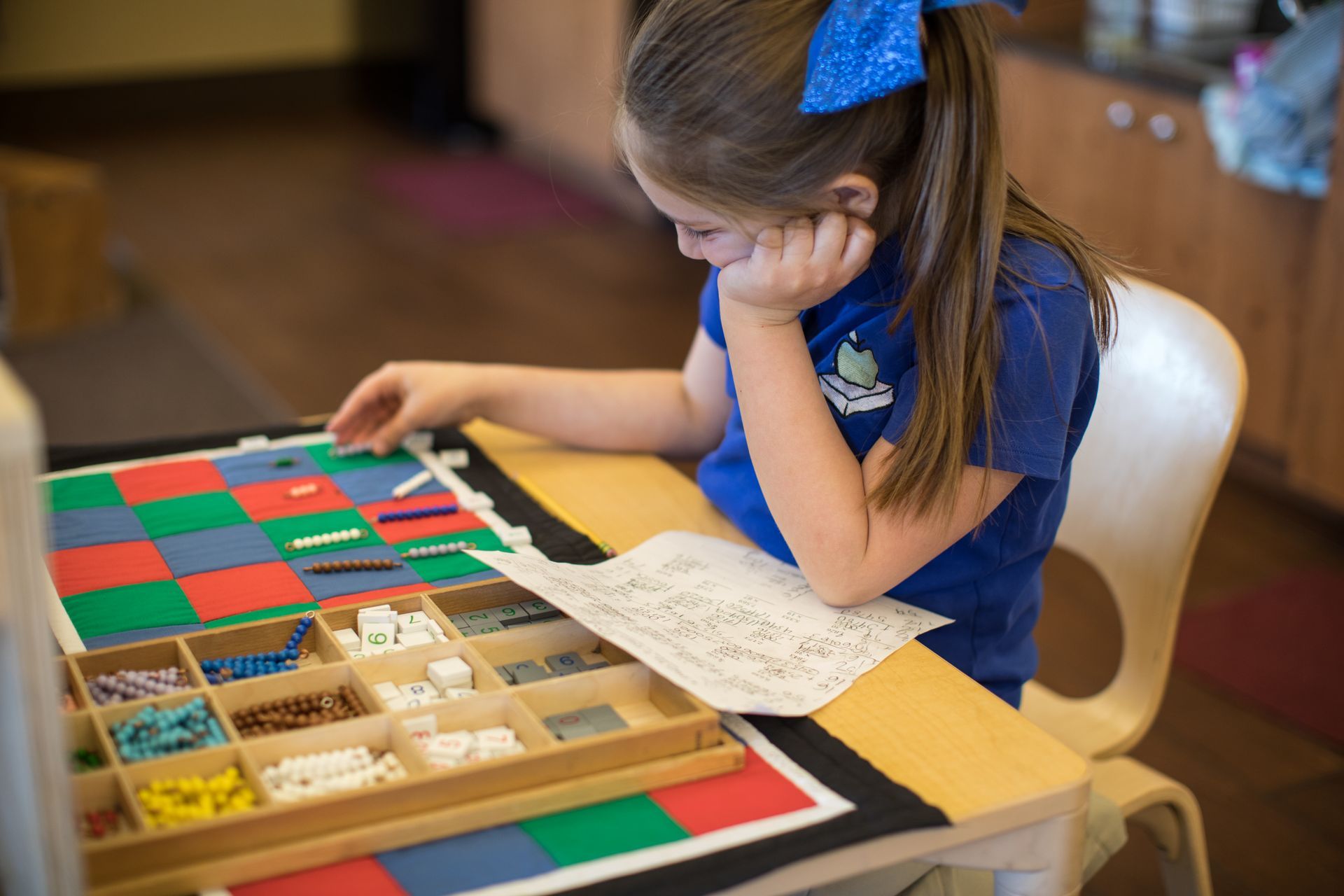
Consider a typical scene in a Primary classroom at St. John’s: a four-year-old works with the decimal system materials, carefully building four-digit numbers using golden beads and number cards. The child stays with this activity for an extended period, repeating the process again and again with deep concentration. They dedicate as much care and attention to the set-up and precision of clean-up as they do to the task itself.
It is easy to imagine this young person years later as a thoughtful, responsible, and hard-working individual. The persistence practiced in these early moments shapes the future self, building the capacity to act with purpose throughout life.
Decision: The Act of the Will
If persistence is the foundation of the will, Dr. Montessori posited that decision is its active expression. Every decision stems from choice.
For children, the ability to make choices is essential. Just as physical movement cannot develop if a child is kept immobile, the internal capacity for self-direction cannot develop if a child is never given the opportunity to choose.
Our lives are a continual series of decisions, and the ability to choose is fundamental to developing true independence. When children are not allowed to make decisions—or when they grow fearful of making the wrong choice—they naturally become reliant on external direction.
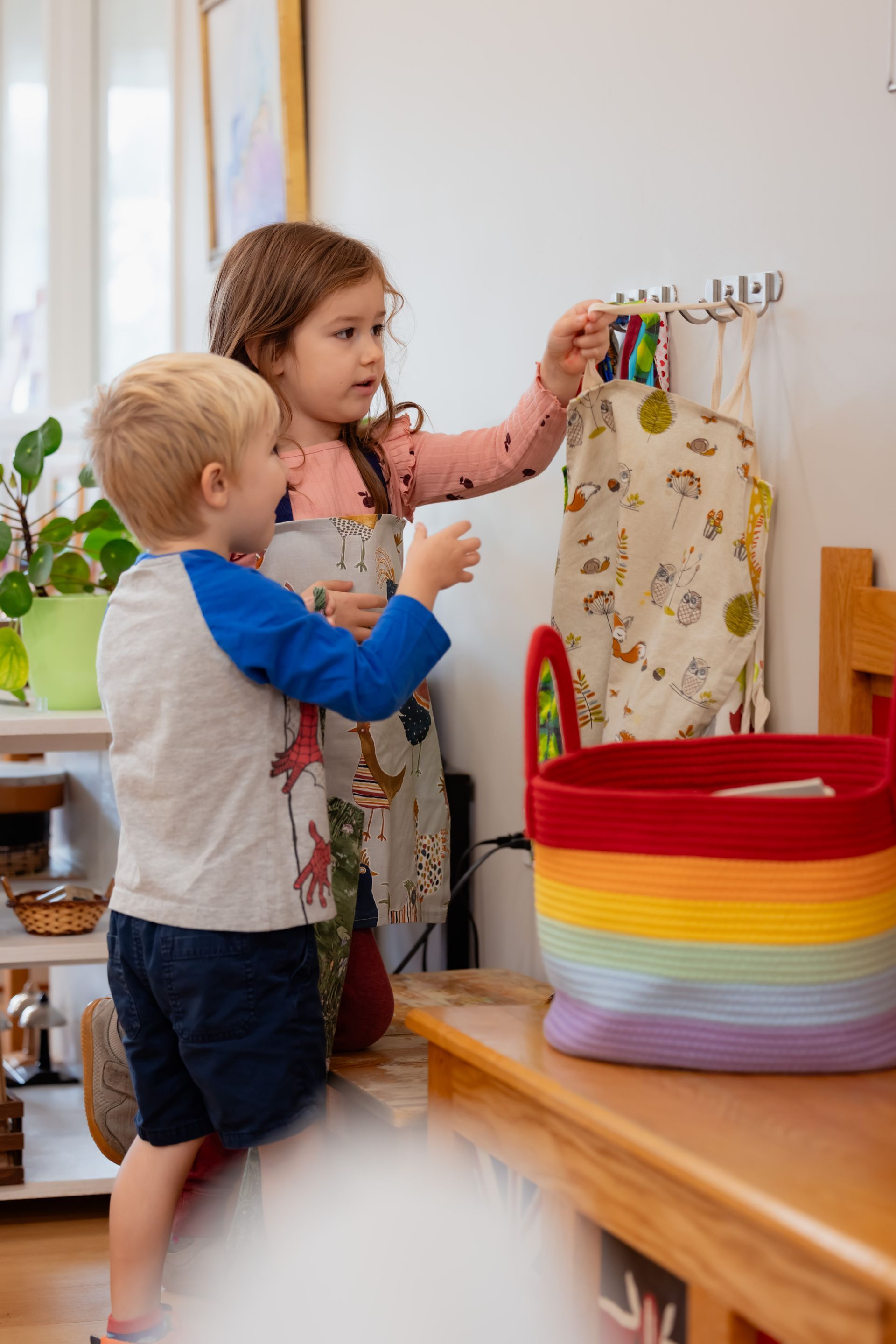
This is why freedom within limits is a cornerstone of our prepared environments at St. John’s. We strengthen a child’s will by offering regular, age-appropriate opportunities to decide. These choices do not need to be monumental; they can be woven gently into everyday routines:
- "Would you like to carry the tray or the mat first?"
- "You may choose any available table for your work."
- "Would you like to put the colored pencils away first, or the paper?"
Each small decision acts as a building block for self-reliance.
Independence Through Practice
Every time a child makes a choice, they practice independence. They learn to trust their own judgment rather than relying on constant instruction from adults. They decide when to begin, when a task is finished, when to move, and when to pause.
As adults—both guides and parents—our responsibility is to ensure we are protecting these opportunities for practice.
“And yet we do something of the same kind when, in order to educate the child’s ‘will,’ we first of all attempt to annihilate it, or, as we say, ‘break' it, and thus hamper the development of every factor of the will, substituting ourselves for the child in everything.”
— Dr. Maria Montessori, Spontaneous Activity in Education
This serves as a gentle reminder for all of us. It can be easy to impose our adult will upon children—sometimes directly through over-direction, but often more subtly by doing things for them rather than allowing them the time to practice, choose, and experience natural outcomes.
At The Montessori Academy at St. John’s, our goal is to partner with families to safeguard this space for growth. By honoring a child's choices today, we support their independence in the present while helping them cultivate the persistence, decision-making skills, and strength of character that will serve them for a lifetime.
Experience the Prepared Environment
Interested in seeing how freedom of choice and deep concentration unfold in our classrooms? We invite you to
observe our environments in action.